We spend plenty of time thinking about grain bills, hop schedules, water chemistry, and equipment, but yeast is the ingredient that actually turns wort into beer. Treat it well and it will produce alcohol, carbonation, aroma, flavor, and the proper finishing character for your recipe. Treat it poorly and even the best wort can become sluggish, overly sweet, harsh, or simply unpredictable.
Yeast is alive, and that simple fact should guide every decision we make after the boil. It does not respond to instructions like a piece of equipment. It responds to its environment. Temperature, oxygen, nutrition, sanitation, pitch rate, wort gravity, and time all influence what yeast does and what your finished beer becomes.
What Is Brewing Yeast?
Yeast is a group of microscopic, single-celled fungi. Most traditional beer fermentations rely on strains within the genus Saccharomyces. Ale strains are generally classified as Saccharomyces cerevisiae, while traditional lager strains are usually Saccharomyces pastorianus, a naturally occurring hybrid associated with fermentation at cooler temperatures.[1]
Although individual yeast cells are too small to see without magnification, an active fermentation contains billions of them. Each cell absorbs nutrients from wort, reproduces, metabolizes sugars, and produces compounds that shape the beer. Ethanol and carbon dioxide are the most obvious products, but yeast also produces esters, higher alcohols, sulfur compounds, organic acids, glycerol, and flavor precursors.
This is why selecting a yeast strain is not simply a matter of choosing between ale and lager yeast. Each strain has its own expected attenuation, flocculation behavior, temperature range, alcohol tolerance, fermentation speed, and flavor profile. A clean American ale strain, an expressive Belgian strain, and a German wheat strain may ferment the same wort into noticeably different beers.
A Few Yeast Terms Every Brewer Should Know
- Attenuation: The percentage of fermentable extract that the yeast consumes. Higher attenuation generally produces a drier beer, while lower attenuation leaves more residual sweetness and body.
- Flocculation: The tendency of yeast cells to gather together and settle out of suspension. Highly flocculent strains often clear quickly, while low-flocculating strains may remain suspended longer.
- Viability: The percentage of yeast cells that are alive.
- Vitality: The metabolic health and readiness of the living cells. A culture can contain living cells that are too stressed or depleted to ferment efficiently.
- Pitch rate: The number of viable yeast cells added in relation to the volume and strength of the wort.
- Lag time: The period between pitching and obvious signs of fermentation. During this period, yeast is adapting, absorbing nutrients, and preparing for growth.
The Brewing Yeast Life Cycle
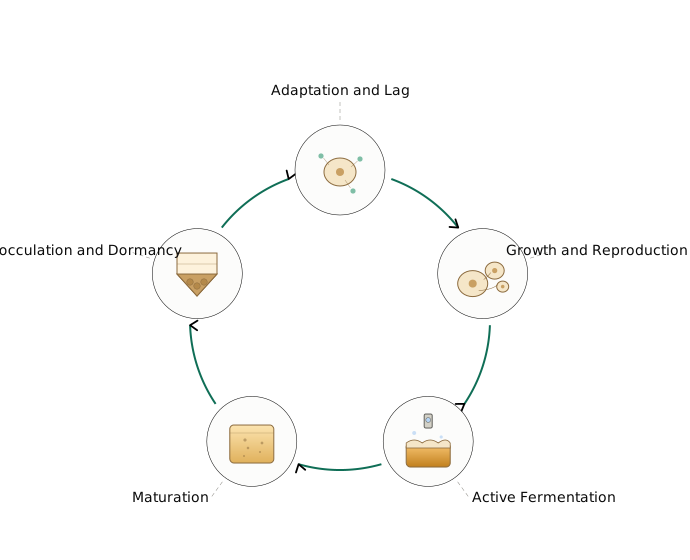
The complete biological life cycle of yeast is more complicated than what occurs in a fermenter. From a brewer’s perspective, however, we can think of fermentation as a series of practical stages.
1. Adaptation and Lag
When yeast is pitched into cooled wort, the cells begin adjusting to their new environment. They absorb oxygen, minerals, amino acids, and other nutrients. Oxygen is particularly important to many liquid and repitched cultures because yeast uses it to produce sterols and unsaturated fatty acids needed for healthy cell membranes.[2]
A lag phase is normal. A long lag phase is not always proof of failure, but it can indicate old yeast, an insufficient pitch, poor oxygenation, extreme wort gravity, temperature shock, or low nutrient availability. The longer wort remains without a healthy yeast population, the more opportunity unwanted organisms may have to establish themselves.
2. Growth and Reproduction
Once adapted, yeast begins reproducing primarily through budding. A small daughter cell develops on a parent cell, grows, and eventually separates. The yeast population expands until nutrients, oxygen, available space, alcohol concentration, and other environmental conditions begin limiting further growth.
This growth stage has an enormous effect on flavor. Esters, higher alcohols, sulfur compounds, and other fermentation products are closely connected to yeast growth. Pitch rate, temperature, oxygen, wort composition, and yeast strain all influence which compounds are produced and in what quantities.[3]
3. Active Fermentation
As available oxygen is depleted, yeast shifts toward alcoholic fermentation. It consumes fermentable wort sugars and produces ethanol, carbon dioxide, heat, and numerous flavor-active compounds. Krausen forms, gravity falls, pH drops, and the fermenter may become several degrees warmer than the surrounding room.
The airlock can be useful for observing pressure changes, but it is not a reliable fermentation meter. A loose lid, leaking seal, changing temperature, or absorbed carbon dioxide can alter airlock activity. Specific gravity readings provide a much more dependable measure of fermentation progress.[4]
4. Maturation
Visible fermentation may slow before the yeast has finished its work. During maturation, healthy yeast continues reducing or transforming compounds such as diacetyl and acetaldehyde. Rushing the beer away from the yeast or rapidly chilling it too early can leave behind buttery, green apple, sulfurous, or otherwise immature flavors.
Do not decide that fermentation is complete because the krausen has fallen or the airlock has stopped. Confirm that gravity has reached the expected range and remains stable before packaging.
5. Flocculation and Dormancy
As fermentable sugars become scarce, many cells flocculate and settle to the bottom of the fermenter. The resulting sediment contains yeast along with hop matter, proteins, and other trub. Some of those yeast cells remain viable and can potentially be harvested for another batch.
Settled yeast is not necessarily dead. It has entered a less active state and may resume growth when introduced to fresh wort. Its suitability for reuse depends on its age, sanitation, fermentation history, storage conditions, and overall health.
Proper Yeast Handling
Start With the Right Strain
Choose a strain that matches the beer you intend to brew and the conditions you can provide. Review the manufacturer’s listed temperature range, attenuation, flocculation, alcohol tolerance, and flavor description. A strain may be capable of fermenting outside its recommended range, but that does not mean it will produce the intended result.
Check Freshness and Storage History
Store packaged yeast in the refrigerator and avoid freezing it unless the manufacturer specifically provides a freezing protocol. White Labs recommends keeping brewing cultures at approximately 36°F to 40°F, or 2°C to 4°C, and following the package date for best performance.[5]
Yeast that has spent hours in a hot vehicle or days in warm shipping conditions may lose viability even when the package date looks acceptable. Keep yeast cold until needed and inspect the packaging for leaks, damage, or unusual contamination.
Sanitize Everything That Touches Cooled Wort
Once the wort has been cooled, it is no longer protected by boiling temperatures. Sanitize the fermenter, lid, stopper, airlock, scissors, yeast package, transfer tubing, sampling tools, and anything else that may contact the wort or yeast. Cleaning removes residue. Sanitizing reduces the microorganisms remaining on an already clean surface. One does not replace the other.
Pitch Enough Healthy Yeast
The correct amount depends on wort volume, original gravity, fermentation temperature, yeast format, strain, and culture age. High-gravity beer and cold-fermented lager generally require more yeast than a moderate-gravity ale. A fresh package may be sufficient for one recipe but inadequate for another.
Liquid cultures that are older, intended for high-gravity wort, or being used for a larger batch may benefit from a properly prepared starter. Harvested slurry should be evaluated conservatively because its cell concentration, trub content, viability, and vitality are less predictable than those of a fresh laboratory culture.
Handle Dry Yeast According to Its Instructions
Modern active dry brewing yeast is often designed for direct pitching, but rehydration recommendations vary by manufacturer and product. Follow the instructions for the specific strain rather than applying one universal procedure.
Lallemand’s general rehydration guidance recommends sanitized handling, sterile water at 30°C to 35°C, gentle mixing after an initial rest, and gradual temperature adjustment before pitching. It also warns that a difference greater than 10°C between hydrated yeast and wort can cause temperature shock. The same guidance notes that many direct-pitched fermentations proceed normally, while rehydration can be particularly useful for high-gravity or low-pH wort.[6]
Provide Oxygen at the Right Time
For liquid yeast and harvested cultures, oxygenating or thoroughly aerating cooled wort before or during pitching supports membrane development and healthy growth. Oxygen added after active fermentation has begun is another matter. At that point, unnecessary oxygen exposure can accelerate oxidation and shorten the beer’s useful life.
Some dry yeast manufacturers state that their products contain sufficient internal reserves for an initial fermentation without wort aeration. High-gravity wort may still benefit from oxygenation. Always follow the instructions supplied for the yeast you are using.
Control Fermentation Temperature
Fermentation generates heat, so the temperature inside the fermenter may be warmer than the room. Measure or estimate the beer temperature rather than relying entirely on ambient temperature.
Excessive warmth can produce more esters, higher alcohols, and other unwanted flavors. Temperatures that are too low can create a sluggish fermentation, delayed maturation, or incomplete attenuation. Rapid temperature swings can also stress yeast. Stable control within the strain’s recommended range is usually more valuable than chasing an exact number throughout the day.
Give the Yeast Time to Finish
Brewers sometimes create problems by reacting too quickly. A slow fermentation may need a modest temperature adjustment or gentle resuspension, but opening the fermenter repeatedly, adding more yeast without diagnosis, or transferring the beer prematurely can make matters worse.
Record the original gravity, fermentation temperature, pitching time, yeast strain, package date, and daily gravity when troubleshooting. Good records turn a mysterious failure into a process that can be examined and improved.
What Can Go Wrong?
Underpitching
Underpitching forces a small population to perform more growth and fermentation under increasingly stressful conditions. Possible results include excessive esters, fusel alcohols, sulfur compounds, elevated diacetyl, long lag time, high finishing gravity, or a stalled fermentation. It can also increase the risk of contamination by delaying the establishment of a dominant brewing culture.[3]
Overpitching
More yeast is not always better. A severe overpitch may reduce the growth needed to create the desired flavor profile. The result can be unusually low ester production, thin body, poor flocculation, rapid fermentation, or a harvested culture containing a larger proportion of older cells.[3]
Temperature Stress
Pitching into wort that is too warm can damage cells or encourage an overly aggressive fermentation. Pitching into wort that is too cold can extend lag time and reduce growth. Large temperature differences between a rehydrated culture and the wort can reduce viability and contribute to slow or incomplete fermentation.
Insufficient Oxygen or Nutrition
Yeast with inadequate oxygen, nitrogen, minerals, or other nutrients may struggle to build healthy cells. The risk is greater in very high-gravity wort, heavily refined sugar fermentations, or recipes containing large amounts of nutrient-poor adjuncts. Nutrient additions should be deliberate and measured rather than automatic.
Premature Cooling or Transfer
Cold crashing or transferring as soon as visible activity stops can remove yeast before maturation is complete. This may leave elevated diacetyl, acetaldehyde, sulfur character, or an unexpectedly high finishing gravity. Confirm completion with stable gravity readings and allow an appropriate maturation period.
Poor Harvesting and Storage
Do not harvest yeast from a fermentation that was abnormal, contaminated, excessively high in gravity, unusually hot, stalled, or burdened with obvious off-flavors. Problems in one batch can be carried into the next and may become more severe with each generation.
Collect yeast with sanitized equipment, place it in a sanitized food-safe vessel, label it with the strain, beer, date, and generation, and refrigerate it promptly. White Labs recommends cold storage around 2°C to 4°C, minimizing oxygen exposure, and keeping storage time short. Longer storage requires a more careful assessment of viability and purity.[7]
Never tightly seal actively releasing slurry in a container that cannot safely hold pressure. Stored yeast may continue releasing carbon dioxide.
Autolysis and Declining Viability
Yeast health declines during extended storage and prolonged exposure to alcohol, heat, and pressure. Dead cells may eventually rupture in a process known as autolysis. Excessive autolysis can contribute unwanted yeasty, savory, or harsh flavors. The risk is generally greater with unhealthy yeast, warm storage, high alcohol, and long storage periods.
Contamination
Wild yeast, bacteria, or an unintended brewing strain can change attenuation, acidity, aroma, flavor, and carbonation. Contamination may appear as unexpected sourness, phenolic character, haze, surface growth, continued gravity loss, gushers, or excessive package pressure.
Some wild and diastatic yeast can break down dextrins that ordinary brewing yeast leaves behind. Continued fermentation in a bottle or can can produce dangerous pressure. The Brewers Association recommends confirming fermentation completion, maintaining strong sanitation, preventing accidental mixing of strains, and accounting for organisms or enzymes that can make additional sugars fermentable after packaging.[8]
A Practical Healthy Fermentation Checklist
- Choose a yeast strain appropriate for the beer and fermentation temperature.
- Check the package date and storage condition.
- Calculate whether the package contains enough viable yeast for the wort volume and gravity.
- Sanitize everything that will touch the yeast or cooled wort.
- Cool the wort to an appropriate pitching temperature.
- Aerate or oxygenate when appropriate for the yeast format and recipe.
- Follow strain-specific instructions for direct pitching, rehydration, or starter preparation.
- Maintain a stable fermentation temperature.
- Track fermentation with gravity readings rather than airlock activity alone.
- Allow time for complete attenuation and maturation before packaging.
- Harvest only from clean, healthy, normal fermentations.
- Label harvested cultures and keep them cold for as little time as practical.
Respect the Organism
Good yeast management is less about memorizing one perfect fermentation procedure and more about understanding what the organism needs. Healthy yeast needs an appropriate environment, enough cells, suitable nutrition, controlled temperature, protection from contamination, and sufficient time.
When a fermentation behaves unexpectedly, resist the urge to blame the yeast package immediately. Look at the entire system: strain selection, freshness, pitch rate, sanitation, wort gravity, oxygenation, nutrition, temperature, and handling. Yeast performance is usually the result of all these factors working together.
Learn what your yeast is supposed to do, provide the conditions it needs, and verify its progress with measurements. Do that consistently and yeast becomes less mysterious. More importantly, your beer becomes more consistent, more predictable, and more likely to taste exactly the way you intended.
Sources and Further Reading
- Lager-Brewing Yeasts in the Era of Modern Genetics – FEMS Yeast Research
- Yeast Fermentation – Wyeast Laboratories
- Pitch Rate – Wyeast Laboratories
- Frequently Asked Questions – Wyeast Laboratories
- Basics of Yeast Handling – White Labs
- Best Practices Rehydration Protocol – Lallemand Brewing
- Yeast Harvesting and Repitching Guide – White Labs
- Preventing Package Over-Pressurization – Brewers Association
- Off Flavor Management Series – Brewers Association